


If your teen needs orthodontic treatment, one of the first questions that naturally comes up is: “Should we choose braces or Invisalign?”
The honest answer is, it depends on your teen’s lifestyle, responsibility level, and the complexity of their dental needs.
Parents often search for a pediatric dentist near me or a reliable kids’ dentist, hoping for a clear, unbiased comparison. It’s not just about straightening teeth; it’s about choosing a solution your teen will actually follow through with.
Both braces and Invisalign are highly effective. However, the success of either treatment depends on how well it fits into your teen’s daily habits. A trusted dentist for kids looks beyond just alignment and considers behavior, routine, and long-term results.
This guide provides a transparent breakdown of costs, responsibility, results, and real-life considerations, so you can make the best decision for your teen with confidence.
Understanding the Basics: Braces vs. Invisalign
Before comparing, it’s important to understand how each option works.
What Are Traditional Braces?
Braces use:
- Metal or ceramic brackets
- Wires and bands
They are fixed to the teeth and gradually move them into position over time.
What Is Invisalign?
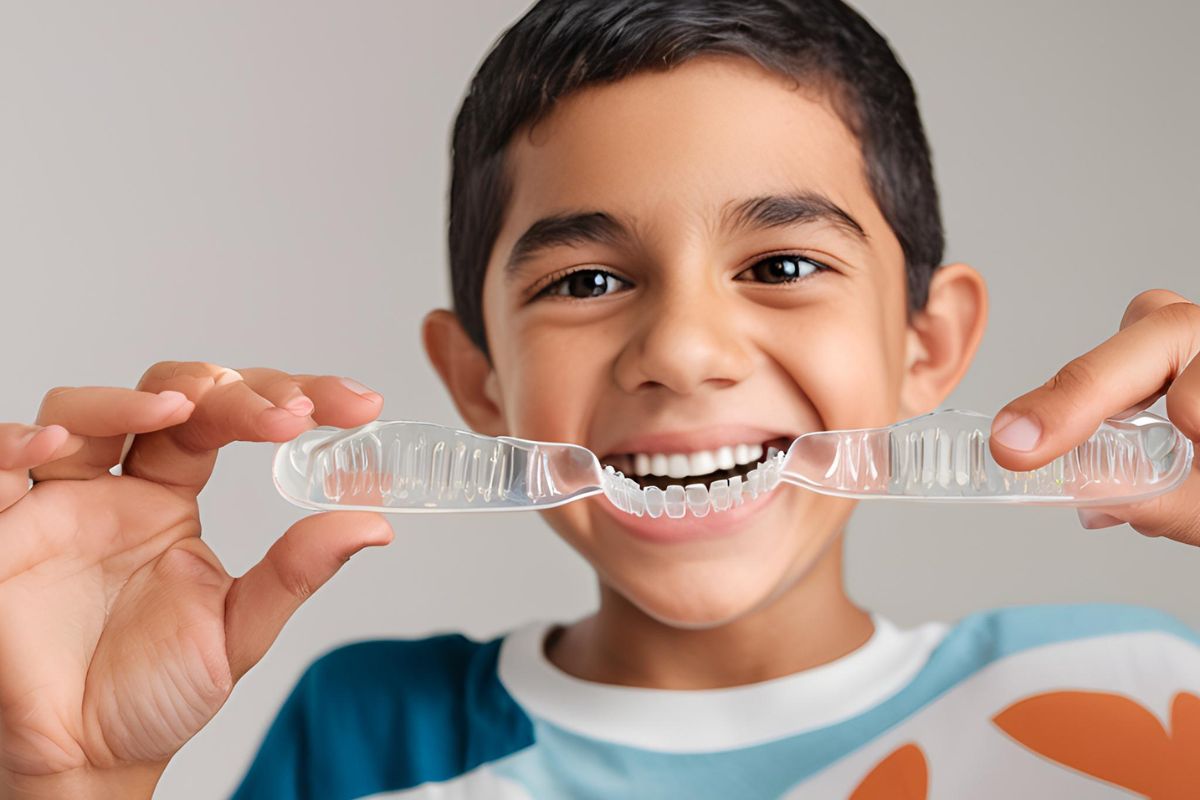
Invisalign treatment uses a series of clear, removable aligners that gently shift teeth into place.
For teens, Invisalign for kids (often called Invisalign Teen) is specifically designed to:
- Accommodate growing mouths
- Include compliance indicators
- Allow flexibility for daily activities
Cost Comparison: Braces vs. Invisalign
Cost is often one of the first concerns for parents.
Are Braces More Affordable?
Traditional braces are often:
- Slightly less expensive
- Widely covered by insurance
Is Invisalign More Expensive?
Invisalign can sometimes cost more depending on:
- Case complexity
- Number of aligners needed
However, the difference is often smaller than expected.
What Parents Should Consider
Instead of focusing only on cost, consider:
- Compliance (will your teen wear aligners properly?)
- Risk of extended treatment
- Long-term value
A pediatric dentist near me will help you understand which option provides the best outcome for your investment.
Responsibility: The Biggest Deciding Factor
This is where the real difference lies.
Braces: Low Responsibility, High Reliability
Braces are fixed, which means:
- Your teen can’t remove them
- Treatment continues 24/7
- Less room for error
This makes braces ideal for teens who:
- May forget routines
- Struggle with consistency
Invisalign: High Responsibility, High Flexibility
With Invisalign for kids, aligners must be worn:
20–22 hours per day
They must be removed for:
- Eating
- Drinking (except water)
- Brushing
Ask Yourself Honestly
- Will your teen remember to wear them?
- Will they avoid losing aligners?
- Can they maintain good hygiene habits?
A kids’ dentist near me often emphasizes that responsibility, not appearance, is the most important factor when choosing Invisalign.
Daily Life Impact: What Will Change for Your Teen?
Eating Habits
Braces:
- Avoid sticky, hard, or crunchy foods
Invisalign:
- No food restrictions (aligners removed before eating)
Oral Hygiene
Braces:
- Requires careful brushing around brackets
Invisalign:
- Easier brushing and flossing
- Must clean aligners regularly
Sports and Activities
Braces:
- May require mouthguards
Invisalign:
- Aligners can be removed for sports
Confidence and Appearance
Many teens prefer Invisalign because:
- Aligners are nearly invisible
- No metal brackets
However, braces today are also more discreet than before.
Results: Which Option Works Better?
Both treatments are effective, but not always equally suited.
Braces: Best for Complex Cases
Braces are often recommended for:
- Severe crowding
- Bite issues
- Complex alignment problems
Invisalign: Best for Mild to Moderate Cases
Invisalign aligners are effective for:
- Mild crowding
- Spacing issues
- Moderate alignment corrections
Important Insight
A skilled dentist for kids will recommend the option that ensures:
- Predictable results
- Long-term stability
- Healthy development
Addressing Common Parent Concerns
“Will My Teen Actually Wear Invisalign?”
This is the most important question.
If the answer is uncertain, braces may be the better choice.
“Is Invisalign Faster?”
Not necessarily.
Treatment time depends on:
- Case complexity
- Patient compliance
“Are Braces Painful?”
Both options may cause mild discomfort initially, but:
- Pain is temporary
- Adjustments are manageable
“Is Invisalign Safer?”
Both treatments are safe when monitored by a pediatric dentist.
When Should You Search for a Pediatric Dentist Near Me?
You should consult a pediatric dentist near me if:
- Your teen has alignment issues
- You’re unsure which treatment is best
- You want a personalized evaluation
Early consultation ensures better planning and results.
How a Pediatric Dentist Helps You Decide
A trusted dentist for kids evaluates:
- Jaw growth and development
- Teeth alignment
- Lifestyle and habits
- Responsibility level
This ensures your teen receives a treatment plan that works in real life, not just on paper.
Choose Invisalign If:
- Your teen is responsible and disciplined
- Appearance matters to them
- Their case is mild to moderate