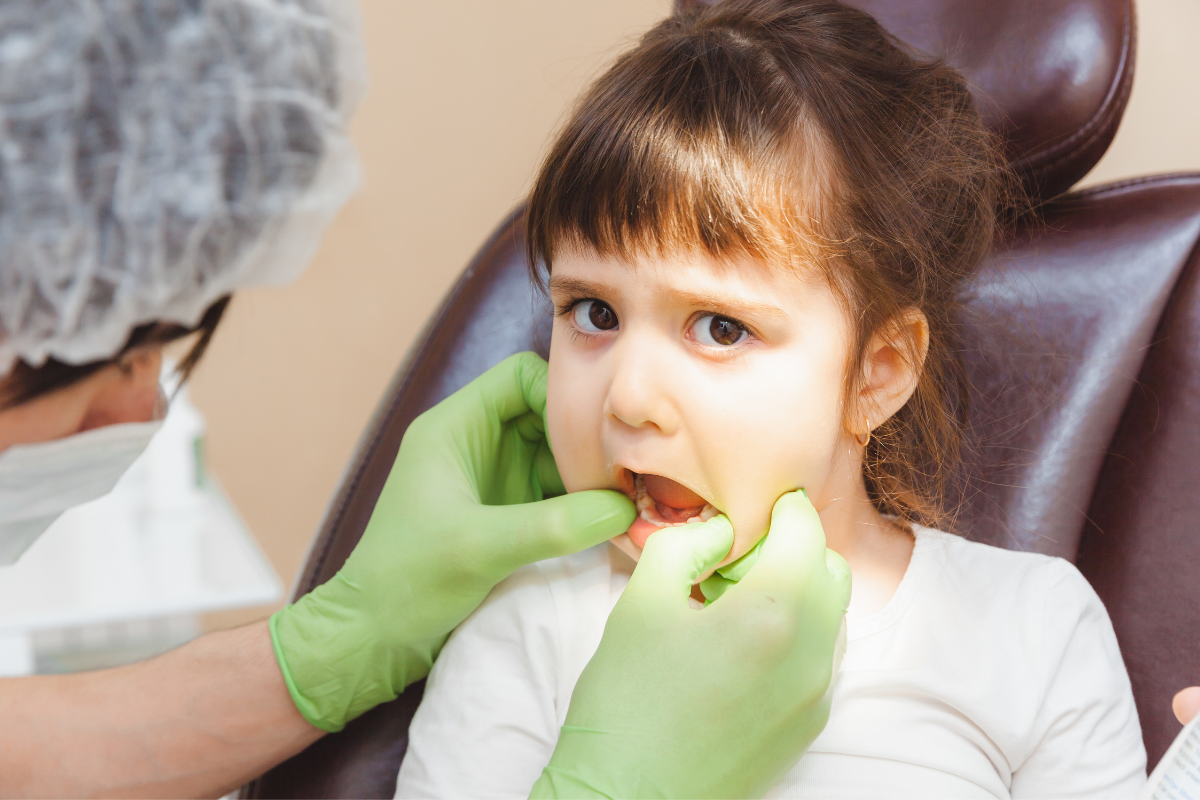
As children grow, their smiles go through many changes. Baby teeth fall out, permanent teeth begin to appear, and the jaw continues to develop. During this transition, parents may notice overlapping teeth, gaps, an uneven bite, or front teeth that seem to stick out. Some changes are a normal part of development, while others may deserve a closer look.
The challenge is knowing when to wait and when to schedule an evaluation. Not every crooked tooth requires braces, and an early orthodontic visit does not automatically mean your child needs treatment. However, certain bite problems are easier to assess while the teeth and jaws are still developing.
If you’re searching for a children dentist in Springfield, MO, understanding these warning signs can help you make informed decisions about your child’s oral health. At Smile Zone, we provide kids friendly dental care that includes monitoring developing teeth, evaluating bite concerns, and helping families understand when an orthodontic consultation may be appropriate.
Is It Normal for Children to Have Crooked Teeth?
Yes, some irregularity is common as children lose baby teeth and permanent teeth emerge. During the mixed-dentition stage, children have a combination of baby and permanent teeth, so their smiles may temporarily look uneven.
For example, newly erupted permanent front teeth may appear larger than the baby teeth they replace. Small gaps may also appear as the mouth develops. These changes do not necessarily indicate an orthodontic problem.
However, it is important not to assume that every alignment issue will correct itself.
Crowding, teeth erupting out of position, and certain bite problems may persist as your child grows. A dental professional can evaluate whether the changes appear consistent with normal development or whether further assessment is appropriate.
Common changes parents may notice
- Slight gaps between developing teeth
- Permanent front teeth that look larger than baby teeth
- Temporary unevenness as new teeth erupt
- Mild crowding while the remaining baby teeth are present
- Changes in the way the upper and lower teeth meet
The key is to look beyond appearance alone. How your child’s teeth fit together, how the jaws move, and whether chewing is comfortable can all help determine whether an evaluation is needed.
7 Signs Your Child’s Bite or Crooked Teeth Need Attention
Parents do not need to diagnose orthodontic problems at home. However, noticing changes early can help you decide when to discuss your concerns with a dental professional.
1. The Teeth Are Crowded or Overlapping
Crowding occurs when there is insufficient space for teeth to align comfortably within the dental arches. You may notice permanent teeth erupting behind other teeth, overlapping front teeth, or teeth that appear twisted.
Mild irregularity during tooth eruption may change as the mouth develops. More pronounced crowding, however, may indicate that the available space is limited.
Crowded teeth can also be harder to brush and floss thoroughly, particularly when teeth overlap closely.
A dental evaluation can help determine whether your child needs monitoring, an orthodontic assessment, or treatment planning. The right approach depends on the severity of the crowding, the child’s stage of development, and the position of the developing permanent teeth.
2. The Upper and Lower Teeth Do Not Fit Together Properly
A bite problem, also called a malocclusion, occurs when the upper and lower teeth do not meet in the expected relationship.
Several types of bite concerns can occur in children.
Overbite: The upper front teeth overlap the lower front teeth vertically. Some overlap is normal, but an unusually deep bite may need evaluation.
Overjet: The upper front teeth extend noticeably forward beyond the lower front teeth. Protruding teeth may be more vulnerable to injury during falls or sports.
Underbite: The lower front teeth sit in front of the upper front teeth when the child bites down.
Crossbite: One or more upper teeth bite inside the lower teeth rather than outside them. A crossbite may involve the front or back teeth.
Open bite: Some upper and lower teeth do not meet when the child closes their mouth, leaving a visible gap.
The appearance of a bite does not reveal the entire problem. A dentist or orthodontic professional can assess how the teeth meet and whether the jaw position or tooth alignment requires attention.
3. Your Child Has Difficulty Biting or Chewing
Children should generally be able to bite and chew food without persistent discomfort.
Pay attention if your child regularly struggles to bite into foods, chews predominantly on one side, or appears uncomfortable when bringing the teeth together.
These behaviors can have several causes, including dental pain, tooth problems, or an uneven bite. They do not automatically indicate that orthodontic treatment is needed.
If chewing is painful or difficult, arrange a dental evaluation rather than assuming your child will outgrow the problem. Seek prompt advice if the difficulty begins suddenly or occurs with swelling or significant pain.
4. The Jaw Shifts When Your Child Closes Their Mouth
Watch how your child’s lower jaw moves when they bite down. Does it appear to slide to one side? Do the teeth seem to fit together only after the jaw shifts position?
A change in jaw position may be associated with a crossbite or another bite discrepancy. However, jaw movement can have different causes, so it should be assessed professionally rather than diagnosed from appearance alone.
Mention any noticeable shifting to your child’s dentist, particularly if it occurs repeatedly or is accompanied by discomfort.
5. Your Child’s Front Teeth Stick Out Noticeably
Front teeth that protrude significantly may be more exposed during everyday activities, playground accidents, and sports.
Parents may notice that the upper front teeth extend well beyond the lower teeth or that the lips do not close comfortably over them at rest.
Prominent front teeth do not always require immediate treatment, but the degree of protrusion and the child’s stage of growth can affect the recommendations.
An evaluation can help determine whether monitoring is sufficient or whether early orthodontic care should be considered.
6. Baby Teeth Fall Out Too Early or Remain Longer Than Expected
Baby teeth help maintain space for the permanent teeth that follow them. When a baby tooth is lost prematurely because of injury, decay, or extraction, neighboring teeth may move into the space and affect the eruption path of the permanent tooth.
On the other hand, a baby tooth that remains in place while the permanent tooth erupts elsewhere may also warrant attention.
Timing varies from child to child, so one unusual-looking tooth does not automatically mean there is a serious problem. However, if a permanent tooth appears to be erupting behind a baby tooth, or a tooth seems unusually delayed, ask your child’s dental professional whether an examination is needed.
7. Your Child Has Persistent Oral Habits or Other Warning Signs
Thumb sucking, finger sucking, prolonged pacifier use, and tongue thrusting can influence the position of teeth or the developing bite in some children. The effects depend on factors such as the habit’s frequency, intensity, and duration.
Other concerns worth mentioning include frequent cheek biting, speech difficulties that may be related to tooth position, and difficulty keeping certain teeth clean because of crowding.
These signs do not prove that orthodontic treatment is necessary. They are useful details to share with the dental team so your child’s development can be evaluated in context.
When Should a Child Have an Orthodontic Evaluation?
Parents sometimes assume they should wait until all baby teeth have fallen out before considering orthodontic care. That is not always necessary.
The American Association of Orthodontists recommends an initial orthodontic checkup by age seven. At this stage, many children have enough permanent teeth for a professional to assess developing bite and alignment concerns.
An early evaluation does not mean that braces should begin at age seven. Depending on the findings, the recommendation may be to:
- Monitor the child’s teeth and jaw as they develop.
- Schedule periodic follow-up examinations.
- Address a specific problem while the child is still growing.
- Consider treatment later, when more permanent teeth have erupted.
- Refer the child for a more detailed orthodontic assessment.
Some children benefit from early or interceptive orthodontic treatment, while others do well with observation until they are older.
If you notice a significant bite concern before age seven, you do not need to wait for that birthday to ask a dental professional for advice.
Can Crooked Teeth Straighten on Their Own?
Some changes in alignment occur naturally as permanent teeth replace baby teeth. However, there is no reliable way for parents to predict at home whether a particular crowding or bite problem will resolve without treatment.
Small gaps may change as the permanent teeth erupt. In other cases, a lack of space, a crossbite, or a significant discrepancy between the upper and lower jaws may remain.
Avoid trying to push teeth into position or using unapproved devices to correct alignment. Tooth movement should be planned and monitored by a qualified dental professional.
If your child’s teeth look increasingly crowded or the bite appears uneven, an examination can help clarify whether the best next step is monitoring or further assessment.
What Happens During a Dental or Orthodontic Evaluation?
An evaluation helps the dental professional understand how your child’s teeth are developing and whether there are concerns that need attention.
At a kids friendly dental visit, the team may examine:
- The position and condition of baby and permanent teeth
- How the upper and lower teeth meet
- The timing and pattern of tooth eruption
- Signs of crowding, spacing, or crossbite
- Oral habits that may affect tooth position
- Areas that are difficult to clean because of alignment
Dental X-rays may be recommended when clinically appropriate to assess developing teeth or investigate a concern that cannot be fully evaluated by looking inside the mouth.
If a more detailed orthodontic assessment is needed, your child’s dentist can discuss the appropriate next step. The treatment recommendation will depend on the child’s individual needs rather than the appearance of one crooked tooth alone.
Does Every Child With Crooked Teeth Need Braces?
No. Crooked teeth do not automatically mean that a child needs braces or clear aligners.
Some children need only routine monitoring as their permanent teeth erupt. Others may benefit from early intervention to address a particular bite problem, create space, or guide tooth and jaw development. Some alignment concerns are best treated later, once the child is older.
The important distinction is between identifying a concern and deciding when treatment should begin.
At Smile Zone, we provide kids friendly dental services in Springfield, Missouri, including monitoring developing teeth and evaluating bite concerns. Our team can help parents understand what we observe and whether an orthodontic evaluation or referral may be appropriate.
Treatment decisions should be based on a professional assessment, the child’s growth and development, and the benefits and limitations of the available options.
How Parents Can Support Healthy Dental Development at Home
Although parents cannot correct a bite problem themselves, everyday habits can support good oral health while children grow.
Keep routine dental appointments. Regular examinations allow the dental team to monitor tooth eruption, identify developing concerns, and recommend follow-up when needed.
Encourage consistent brushing and flossing. Help your child clean all tooth surfaces, especially where crowded or overlapping teeth are harder to reach.
Mention changes you notice. If a tooth begins erupting out of position or the bite appears different, share your observations at the next visit—or contact the office sooner if the change is concerning.
Discuss persistent oral habits. If thumb sucking, finger sucking, or tongue thrusting continues, ask whether it may be affecting your child’s teeth or bite.
Protect teeth during sports. If your child participates in activities with a risk of dental injury, ask a dental professional about an appropriate mouthguard.
These steps do not replace an orthodontic evaluation when one is needed, but they can help you stay involved in your child’s developing smile.
Frequently Asked Questions
At what age should a child be checked for crooked teeth?
The American Association of Orthodontists recommends an initial orthodontic checkup by age seven. A child with an obvious bite concern may benefit from an evaluation earlier. The visit helps determine whether treatment is needed now, later, or not at all.
Are gaps between a child’s teeth normal?
Gaps can be a normal part of dental development, especially while baby teeth are being replaced by permanent teeth. Their significance depends on the child’s age, which teeth are involved, and how the bite is developing. A dentist can assess whether the spacing is expected or needs further attention.
Should I worry if my child’s permanent teeth are coming in crooked?
Not necessarily. Permanent teeth may initially appear uneven as they erupt, but significant crowding or teeth emerging far out of position deserve attention. A dental examination can help determine whether the teeth should be monitored or whether an orthodontic assessment is appropriate.
Can a child have an orthodontic evaluation before losing all their baby teeth?
Yes. Orthodontic evaluations can be useful while a child still has baby teeth. Some developing bite problems are best assessed during this stage, although many children will not need immediate treatment.
Where can I take my child for a dental evaluation in Springfield, MO?
Smile Zone provides kids friendly dental services in Springfield, Missouri, including routine examinations and monitoring of developing teeth and bite concerns. Our team can help you understand your child’s dental needs and discuss whether further orthodontic assessment may be appropriate.
Help Your Child’s Smile Develop With Confidence
A crooked tooth or uneven bite does not always signal a serious problem, but it is worth paying attention to changes as your child grows. Knowing the difference between common developmental changes and signs that deserve evaluation can help you make informed decisions without rushing into treatment or waiting too long to ask questions.
If you’re looking for a children dentist in Springfield, MO, Smile Zone is here to support your child’s oral health through personalized kids friendly dental care. Our team can examine your child’s developing teeth, discuss any concerns you have noticed, and help you understand the next steps.
Contact Smile Zone to schedule your child’s dental visit.