


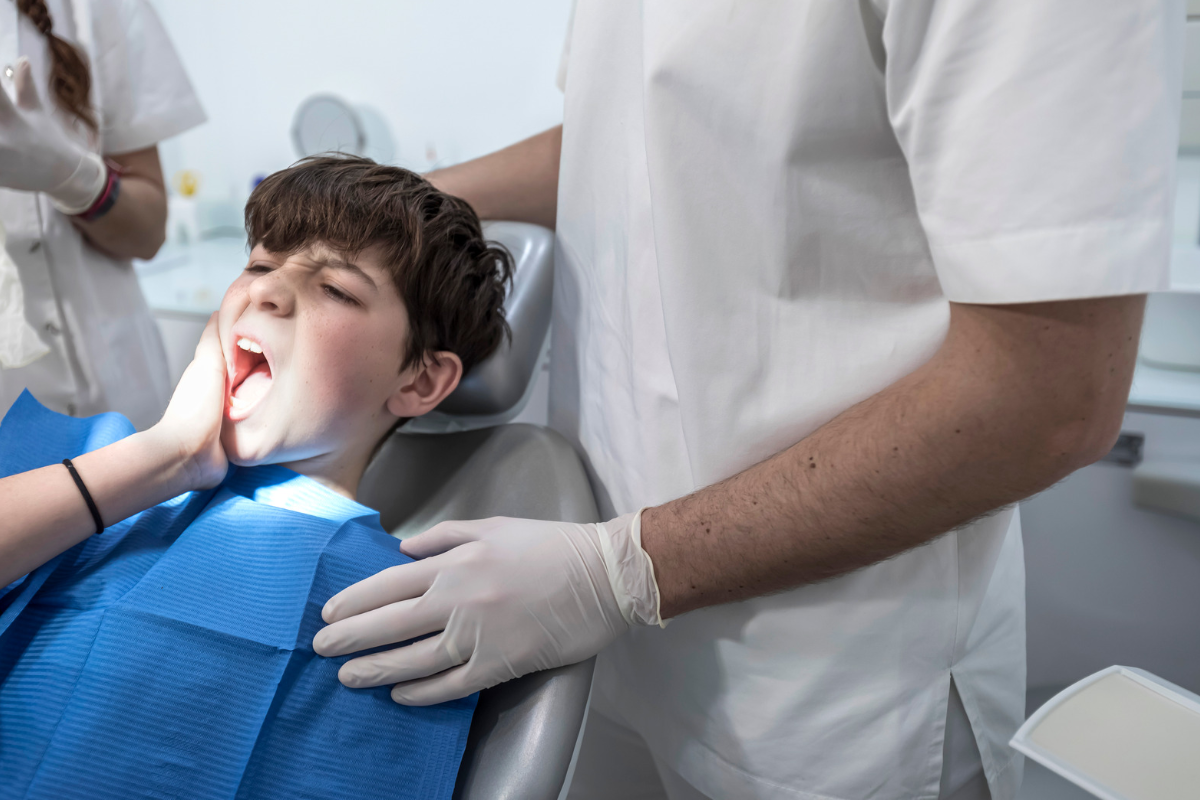
Your child took a tumble off the scooter or got bumped at the playground. The tooth looked fine, maybe a little sore. Then, a few days or weeks later, you notice it’s turning gray, and your stomach drops.
You’re not alone. A darkening tooth after a fall is one of the most common worries parents bring to a dentist. The color change is a signal worth taking seriously, but it doesn’t always mean the worst. Here’s what’s happening inside the tooth, what to watch for, and when to get your child seen.
Why Does a Tooth Turn Gray After an Injury?
Inside every tooth is soft tissue called the pulp, which contains nerves and blood vessels. When a tooth takes a hard hit, those tiny blood vessels can rupture or lose their blood supply.
Blood breakdown products then seep into the tooth’s inner structure (the dentin), staining it from the inside out. The color can range from pink or yellow-gray to dark gray or nearly black. This is why the discoloration can show up well after the accident.
A gray tooth often means the pulp was injured. It does not always mean the pulp has died. Only an exam and an X-ray can tell the difference.
Why the Color Change Can Be Delayed
Parents are often surprised that a tooth looked normal right after the injury. A delayed color change is common because:
- Bleeding inside the tooth may not show right away.
- The pulp may take days or weeks to respond to the trauma.
- Some teeth lose their blood supply slowly.
That’s why we encourage families to have a tooth checked after any significant bump to the mouth, even if it looks fine at first.
Baby Teeth vs. Permanent Teeth: Why It Matters
Baby (primary) teeth. Because baby teeth sit close to the developing permanent tooth underneath, an injury can affect both. Some gray baby teeth stay stable and simply remain discolored until they fall out. Others develop infection, so monitoring is important. A dentist may recommend watching the tooth, treating it, or removing it, depending on the findings.
Permanent teeth. A gray permanent tooth deserves prompt attention. If the pulp is damaged or infected, treatment such as root canal therapy may be needed to save the tooth. In younger patients, the root may still be developing, which calls for specialized approaches.
Signs It’s More Than a Cosmetic Issue
A gray tooth by itself isn’t always painful, so don’t wait for pain. Contact a dentist promptly if you notice:
- A pimple-like bump on the gums near the tooth (it may drain)
- Swelling of the gums, cheek, or face
- Pain when biting or tapping the tooth
- Fever alongside tooth or gum discomfort
- A tooth that feels loose or looks like it has shifted
- The color getting darker over time
Facial swelling or fever with a dental injury needs same-day evaluation. If your child has trouble breathing or swallowing, or you’re worried about a head injury, call 911 or go to the ER.
What to Do Right After a Dental Injury
How you respond in the first hour can affect the outcome.
- Stay calm and check for other injuries. Look for signs of a head injury, such as vomiting, confusion, or unusual sleepiness.
- Rinse gently with water and apply a cold compress to reduce swelling.
- If a permanent tooth is knocked out, hold it by the crown (not the root), rinse it briefly if dirty, and, if your child is old enough and cooperative, try placing it back in the socket. If not, store it in cold milk and get to a dentist right away. Time matters.
- If a baby tooth is knocked out, do not put it back in. Call a dentist for guidance.
- Save any broken pieces and bring them with you.
How Is a Gray Tooth Diagnosed?
Evaluation is usually quick and gentle, especially in a child-focused office. A dentist will typically:
- Ask about when and how the injury happened
- Examine the tooth, gums, and surrounding teeth
- Take dental X-rays to look at the root and surrounding bone
- Check how the tooth responds to gentle testing
- Compare findings over time, since some teeth need monitoring across several visits
Because injured teeth can change, a single visit doesn’t always tell the whole story. Follow-up appointments are a normal and important part of care.
Treatment Options
The right treatment depends on the child’s age, which tooth is affected, and the condition of the pulp. Possibilities include:
- Monitoring the tooth if there are no signs of infection
- Root canal therapy or a related procedure for an infected or non-vital permanent tooth
- Specialized treatment for immature permanent teeth to support continued root development
- Extraction of a baby tooth if it’s infected or poses a risk to the permanent tooth beneath
- Cosmetic options such as internal whitening or restorations once the tooth is healthy and stable, when appropriate
Outcomes vary from child to child, and no dentist can promise a specific result. Early evaluation gives the tooth the best chance.
Finding a Kids Friendly Emergency Dentist in Springfield
When your child is hurt, you want someone who can see them quickly and make the visit feel safe. A kids-friendly emergency dentist Springfield should be comfortable treating young patients, explain things in plain language, and help your child feel at ease.
At Smile Zone, we provide care for children and families in Springfield, Missouri, and our team understands that a dental injury is stressful for kids and parents alike. We take the time to explain what we see, answer your questions, and talk through options before moving forward.
Tips for the call and the visit:
- Call as soon as you can, and tell us the date and cause of the injury.
- Mention any other symptoms, such as swelling or a bump on the gums.
- Bring any tooth fragments, plus your child’s medical history and a list of medications.
- Tell your child, in simple terms, that the dentist is there to help their tooth feel better.
Can a Gray Tooth Return to Normal?
Sometimes. In some children, mild discoloration lightens as the tooth heals. In others, the tooth stays gray even though it’s healthy, and in others, the gray color signals a pulp problem that needs treatment. There’s no way to tell from color alone, which is why an exam matters.
How to Help Prevent Dental Injuries
You can’t bubble-wrap a child, but you can lower the risk:
- Use a mouthguard for sports like football, basketball, soccer, and skateboarding
- Use helmets with face protection where appropriate
- Childproof stairs and hard surfaces for toddlers
- Discourage chewing on ice, pens, and hard objects
- Schedule regular checkups so we can catch problems early
Frequently Asked Questions
Is a gray tooth after an injury an emergency?
It depends. A gray tooth with no pain or swelling usually isn’t a middle-of-the-night emergency, but it should be evaluated within days. Swelling, fever, a gum bump, or significant pain calls for same-day care.
Will my child’s gray baby tooth hurt the adult tooth underneath?
It can, if there’s an infection, because baby teeth sit close to the developing permanent teeth. That’s why a dentist should evaluate it rather than assuming it’s harmless.
How long after an injury can a tooth turn gray?
It can happen within days, but it may also appear weeks or even months later. If your child had a tooth injury, keep an eye on color changes and mention them at checkups.
Does a gray tooth always need a root canal?
No. Some teeth only need monitoring, while others need treatment. Your dentist will decide based on exam findings, X-rays, and your child’s age.
What if the injury happened weeks ago and my child has no pain?
Still schedule a visit. Teeth with damaged pulp don’t always hurt, and infections can develop quietly.
Don’t Wait on a Gray Tooth
A gray tooth after an injury is your child’s body giving you a clue. The sooner it’s checked, the more options you typically have. If your child’s tooth is changing color, or if they’ve had a recent fall or hit to the mouth, contact Smile Zone in Springfield, Missouri, today to schedule an exam. Our team is here to provide gentle, clear, family-friendly care when your child needs it most.

